
Protein timing to achieve optimal performance
Protein timing to achieve optimal performance – what does that mean? Protein timing is an important strategy for athletes and individuals looking to achieve optimal

A refuelling strategy for sports and events refers to the recovery phase and more specifically the muscle glycogen lost during a sporting match or event.
Now, it is important to incorporate adequate protein to repair muscle damage and fat to ensure overall health. More often than not, fats become deemed as ‘bad” and many sporting people become deficient which leads to a person having more colds and flu-like symptoms.
Back to refuelling…. If you read my previous blog, you will understand that you need a certain amount of carbohydrates to fuel for your sport or event. However, after the match or event, we now need to refuel which means replenishing the carbohydrates lost (muscle glycogen).
During matches or events and even training sessions, you accumulate a significantly high level of fatigue. The demands need to be matched with a sufficient refuelling strategy otherwise you risk injury or not being able to maintain performances throughout your schedule.
Too much fatigue = Decrease in Performance.
Accumulation of fatigue = Decrease performance over a longer period of time.
Following a match or event and high-intensity training sessions, the replenishment of liver and muscle glycogen should be prioritised in the first <20-minutes of recovery. Alongside this protein, synthesis should also be prioritised in the first 20-minutes of recovery.
In other words, in the first 20-minutes of you finishing your match/event or training session you should consume ~1.2 g⋅kg−1⋅h−1 of carbohydrates and 30-40g of protein intake.
In short yes. However, the proposed interventions to facilitate post-exercise recovery are often very expensive and have limited research to support their use.
*Cold Water immersion – This is a common method in team sports and individual athletes. However, this could potentially worsen muscle damage despite high-level athletes like Andy Murray and Jessica-Ennis openly endorsing the strategy.
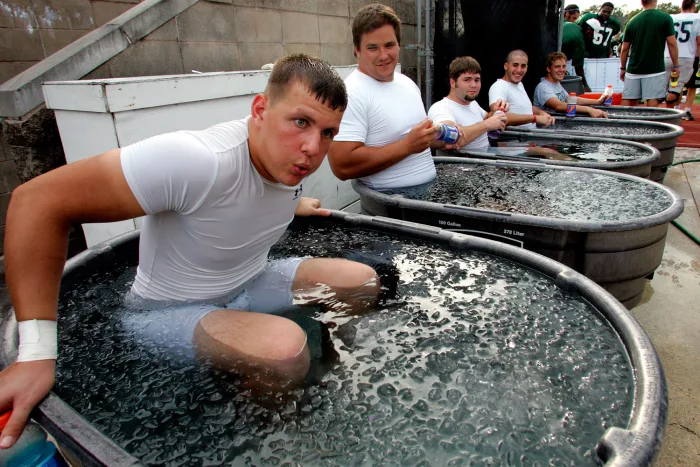
*Compressive tights benefits – These have been found to be quite useful in reducing muscle damage after resistance-type exercise in recreational athletes. This could be a good option alongside improving carbohydrate and protein intake.

*Massage and electrical stimulation – These have also been found to be a useful option to improve muscle stiffness and muscle contraction in muscles like the gastrocnemius. However, there are mixed views – within a sports club, it will be a common theme that an athlete would receive a massage for post-recovery. This is not also possible for an independent athlete as the cost can be extremely and most opt for a nutritional approach.

Therefore, think wisely before paying out for the extra recovery methods and before you attempt to add an extra element of recovery. You need to ensure that your nutrition is on point first before considering anything else.
Optimal nutrition is essential for athletes to consistently perform for your matches or events and training sessions.
Your strategies may change and should be adaptable particularly if travel is involved – Always try to pre-plan your fuelling and refuelling strategies to give you the best chance to perform consistently at high levels.
Fueling for Performance – PMC (nih.gov)
Sports nutrition is vital for optimising training, performance, injury prevention, and recovery – Get in touch today to optimise you and your strategies for success.

HOME | BLOG | CONTACT US
Protein timing to achieve optimal performance – what does that mean? Protein timing is an important strategy for athletes and individuals looking to achieve optimal

When should you eat for optimal performance refers to food timing and in this article we will discuss carbohydrates specifically. Carbohydrates are not just a source of energy; they are the primary fuel that powers athletic performance, supports recovery, and maintains optimal physical and mental function. Understanding the importance of carbohydrates and their timing can make the difference between reaching peak performance and falling short of goals.

Research is a fundamental process that drives the advancement of knowledge across various fields but how does scientific research work? It is through rigorous investigation,